
SWSC 1 - 3 Supporting Teaching and Learning
City Centre Campus, Dumballs Road, Cardiff, CF10 5FE
+44 (0)2920 250 250
info@cavc.ac.uk
This is not a real website is it part of a student's course work, nothing should be taken verbatim. All external links are to CAVC.
Roles and Responsibilities
SCHOOL GOVERNORS

Key Responsibilities:
- Determine how the school’s budget will be spent
- Attend meetings to review curriculum & pupil progress
- Set standards for behaviour and discipline
- Ensure school buildings are safe and welcoming
- Monitor the School Development Plan
- Set objectives for the headteacher
- Adopt statutory policies & respond to inspections
- Maintain confidentiality
School governors serve as strategic leaders and critical friends to the headteacher and staff, working collaboratively to maintain high standards of performance, budgeting, and pupil achievement. Their core responsibilities include determining how the school’s budget is allocated, attending regular meetings to review the curriculum and ensure student targets are met, setting clear standards for pupil behaviour and discipline, and ensuring the school buildings are safe, welcoming, and well-maintained. Beyond these duties, governors produce and monitor the School Development Plan, set objectives for the headteacher, adopt statutory policies, participate in school inspections, and develop action plans in response to inspection reports, all while maintaining strict confidentiality and staying informed about educational trends and legal changes.
The Senior Management Team
Key Responsibilities:
- Deliver an exciting, compliant curriculum that engages all pupils
- Ensure every child is safe, happy, and well-supported
- Monitor pupil progress to confirm learning targets are met
- Contribute to policy development and organisational decisions
- Evaluate pupil achievement across the whole school
- Liaise with governors to support strategic oversight
- Lead by example as both teachers and managers
- Support subject leaders in delivering the curriculum
- Attend regular SMT meetings
- Assume full management of the school in the absence of the Headteacher
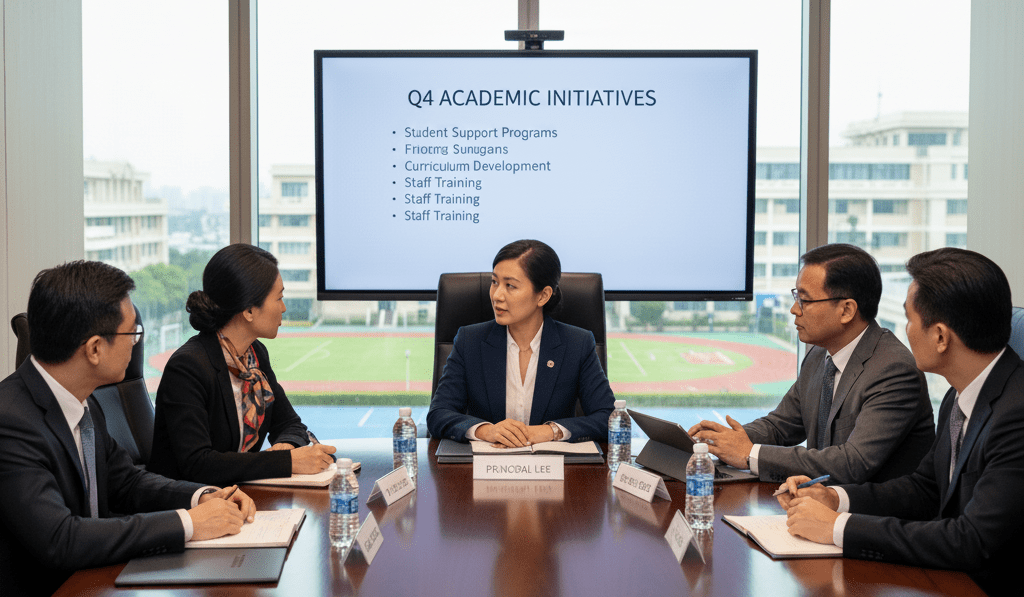
The Senior Management Team, typically comprising the Headteacher, Deputy Head, and sometimes senior teachers in larger schools, is responsible for leading the school, maintaining high performance standards, and securing strong inspection outcomes. Their key responsibilities include designing an engaging and compliant curriculum that excites all pupils, ensuring every child is safe, happy, and well-supported, and closely monitoring progress to confirm that learning targets are met. The SMT contributes to policy development and organisational decisions, evaluates pupil achievement across the school, liaises with governors to support strategic oversight, leads by example both as teachers and managers, supports subject leaders in curricular initiatives, attends regular SMT meetings, and assumes full management of the school in the absence of the Headteacher.
Teachers and Tutors

Key Responsibilities:
- Plan and deliver engaging, differentiated lessons to meet all pupils’ needs
- Teach core and specialist subjects effectively
- Assess, monitor, and track individual pupil progress
- Provide constructive feedback and set appropriate homework
- Maintain good order and discipline in the classroom
- Encourage curiosity, confidence, and personal development
- Offer guidance on academic, behavioural, and wellbeing issues
- Communicate regularly with parents and carers
- Collaborate with support staff, ALNCo, and external agencies
- Contribute to school events, parents’ evenings, and extracurricular activities
- Stay updated with curriculum changes and professional development
Teachers and tutors are at the heart of the educational process, responsible for planning, delivering, and assessing engaging lessons that meet the diverse needs of all pupils while maintaining a positive and disciplined classroom environment. They design schemes of work, teach core and specialist subjects, monitor and track individual progress, provide constructive feedback, and set appropriate homework to reinforce learning. Beyond instruction, they encourage curiosity and personal development, offer guidance on academic and behavioural matters, communicate effectively with parents and carers, and collaborate with support staff and external agencies when required. Teachers also contribute to school events, parent evenings, and professional development, ensuring they remain up-to-date with curriculum changes and best teaching practices to inspire lifelong learning in every child.
Support Staff

Teaching Assistants (TAs):
- Prepare classrooms and resources for lessons
- Support pupils with reading, writing, numeracy, and other tasks
- Assist in managing pupil behaviour and promoting positive engagement
- Work with small groups or individuals under teacher direction
- Support pupils during lessons, trips, and activities
Higher Level Teaching Assistants (HLTAs):
- Plan and deliver lessons independently (short-term cover)
- Assess and report on pupil progress
- Supervise and support other classroom staff
- Lead interventions or enrichment activities
- Liaise with parents and external professionals
One-to-One Support Workers:
- Provide targeted support for pupils with ALN, literacy, or bilingual needs
- Implement individual education plans (IEPs/EHCPs)
- Support inclusion and access to the curriculum
- Monitor and record pupil development and wellbeing
Lunchtime Supervisors:
- Ensure pupil safety and welfare during lunch and break times
- Supervise dining areas and playground activities
- Assist with eating, accidents, spillages, and first aid
- Promote positive behaviour and social interaction
- Report concerns to senior staff
School Administrators/Secretaries:
- Answer phones, greet visitors, and handle general enquiries
- Manage pupil and staff records, attendance, and data submissions
- Process correspondence, filing, and word processing
- Arrange meetings, events, and appointments
- Support financial administration and DfE data returns
Site Managers/Caretakers:
- Maintain school buildings and grounds (cleanliness, safety, repairs)
- Manage security, heating, lighting, and access
- Oversee health and safety compliance
- Coordinate contractors and maintenance schedules
Support staff play a vital role in ensuring the smooth daily operation of a school and directly contribute to creating a safe, inclusive, and effective learning environment for all pupils. This diverse group includes teaching assistants, higher level teaching assistants (HLTAs), one-to-one support workers, lunchtime supervisors, school administrators, and site managers, each with specialised responsibilities. Teaching assistants prepare classrooms, support pupils with reading, writing, and numeracy tasks, help manage behaviour, and assist during lessons and school trips. HLTAs may independently teach classes, plan lessons, assess progress, and supervise other staff, while one-to-one support workers provide targeted help for pupils with additional learning needs (ALN), literacy, or bilingual requirements. Lunchtime supervisors ensure pupil safety and welfare during breaks, manage dining areas, and promote positive play, and school administrators handle essential office duties such as answering phones, managing records, arranging meetings, and submitting data to authorities. Together, support staff enable teachers to focus on instruction, enhance individual pupil progress, and uphold the overall wellbeing and organisation of the school community.